
Randolph County Arrest Records and Court Charges
Randolph County arrest records come from the sheriff, jail, and police side of the event. They may show the person arrested, date, listed charges at booking, and arresting agency. The official Randolph County Sheriff recent-arrests page says current inmates and recent arrests have moved to the Randolph County Sheriff app, so the booking side is not a normal county web table. For jail custody and booking detail, use the Randolph County inmate records workflow rather than assuming every arrest has a court case yet.
Court charges after arrest are different. Indiana uses county prosecutors, and the Randolph County Prosecutor decides what charges should be filed after reviewing facts from law enforcement or private citizens. Once a charging document is filed, MyCase and the Randolph County Clerk become the main access points for the court charge record. The full case file, including pleas, motions, disposition, and sentence, belongs with Randolph County criminal court records.
The sheriff recent-arrests source shows visible arrest listing fields such as name, date, charges, and agency. Examples in the research included the Randolph County Sheriff's Department, Winchester Police Department, and Union City Police Department as agencies. Those fields help identify a booking, but the court record must be checked to learn whether a charge was filed, amended, dismissed, or resolved.
The Randolph County recent-arrests page is the county source for the app notice and booking-side context.
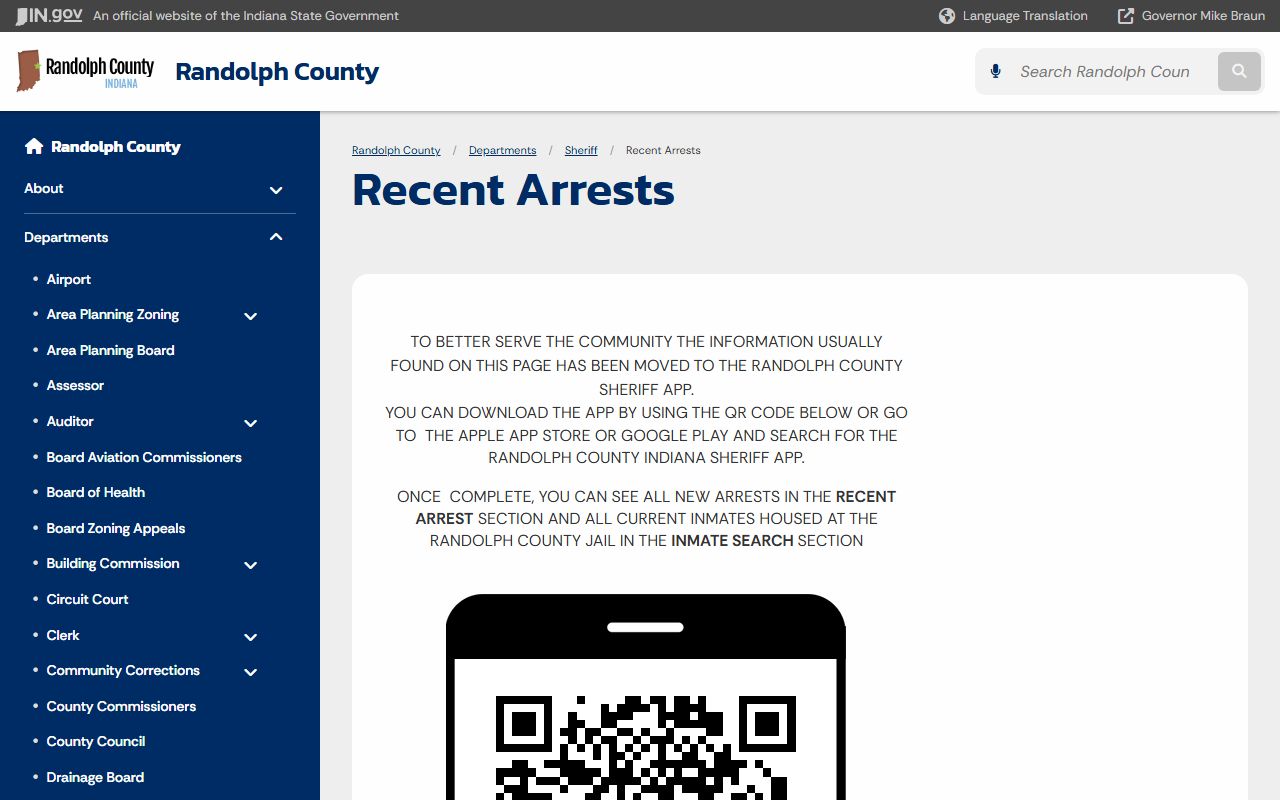
That app notice matters because Randolph County arrest records may start outside the court system before charges appear in MyCase.
Search Randolph County Arrest Records and Charges
For charges after arrest, start with Indiana Courts Case Search, also known as MyCase. Randolph Circuit Court and Randolph Superior Court are Odyssey courts. MyCase can be searched by case number, party name, attorney, citation number, or cross-reference number. Date of birth may help narrow a party search, but DOB is not displayed in the public case details because it is excluded from public access.
- Search MyCase by the defendant's last name plus first name, or use a known case number.
- Open the Randolph Circuit Court, Randolph Superior Court, or city court result that matches the person and filing date.
- Review the charge list, court identifier, filing date, bond entries, and Chronological Case Summary.
- Contact the Randolph County Clerk if a non-confidential document is not online or a certified copy is needed.
MyCase is not the official court record. The Indiana Judicial Branch says official records must come from the court that maintains them. In Randolph County, the practical fallback is the Randolph County Clerk in Room 201 at the courthouse, phone (765) 584-4903, or the specific Circuit or Superior Court office listed in the county sources.
The INjail Public Access portal can help when the question is current county-jail custody rather than court charge status.
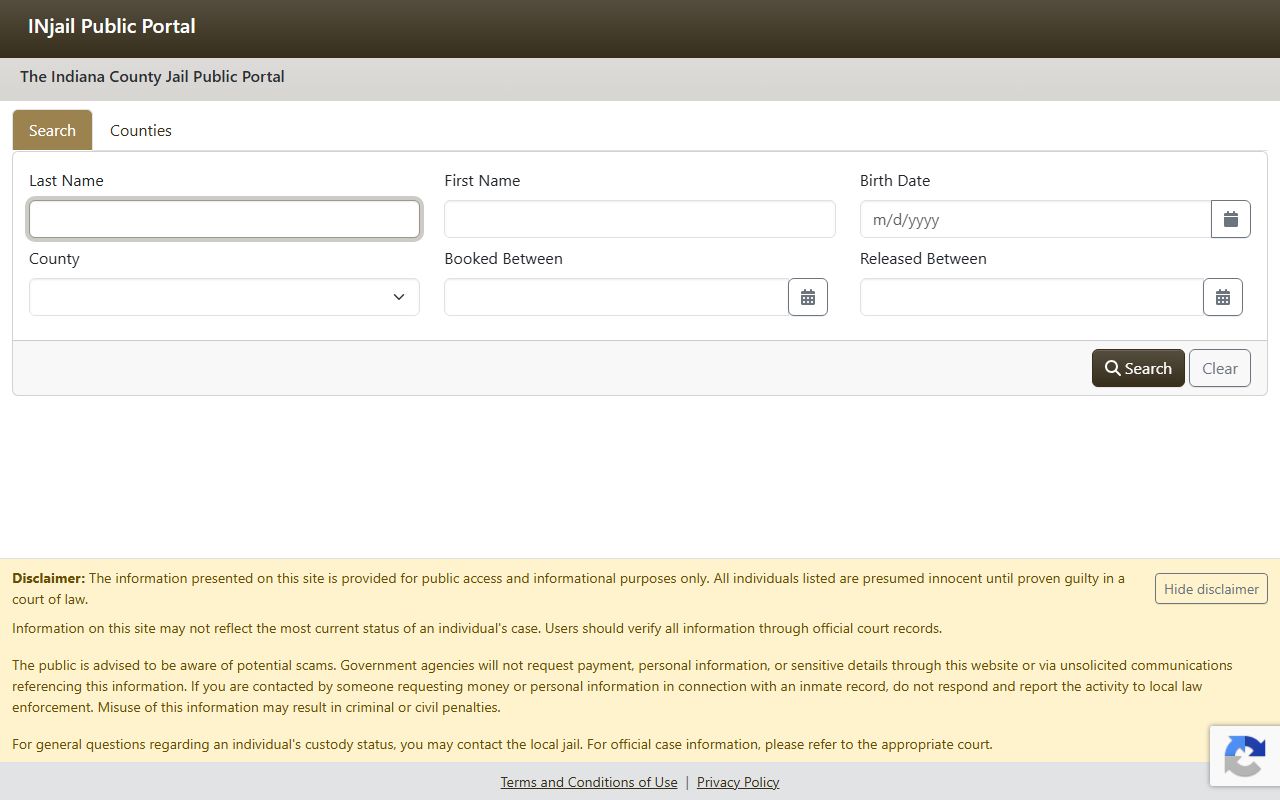
INjail is useful for custody checks, while MyCase remains the main path for Randolph County charges filed in court.
Randolph County Charge Documents
A court charge record begins with a filing. In Randolph County, the prosecutor may file an information or related charging document in the court assigned under local rules. The research does not identify routine grand-jury indictment access for local cases, so the table below explains the document types in a practical court-record sense without promising that each one appears in every Randolph County case.
| Document | Who Starts It | What It Does | Randolph County Use |
|---|---|---|---|
| Complaint | Law enforcement or prosecutor | States alleged facts or an accusation | May appear with probable-cause or early filing material when public |
| Information | Prosecutor | Files formal criminal charges in court | Common path for Indiana county criminal filings |
| Indictment | Grand jury | Charges after grand-jury action | Check the court file if a case shows indictment language |
The charge entry should be read with the court assignment. Randolph local rules send misdemeanors, infractions, ordinance violations, small claims, and many Level 6 felonies to Superior Court. Circuit Court receives murder, mental health, adoption, probate categories, many juvenile matters, and serious felony cases by the local month-of-offense allocation rule.
The prosecutor's victim-services material also ties to criminal filings. The Randolph County crime victim restitution page describes help for restitution and violent-crime compensation.
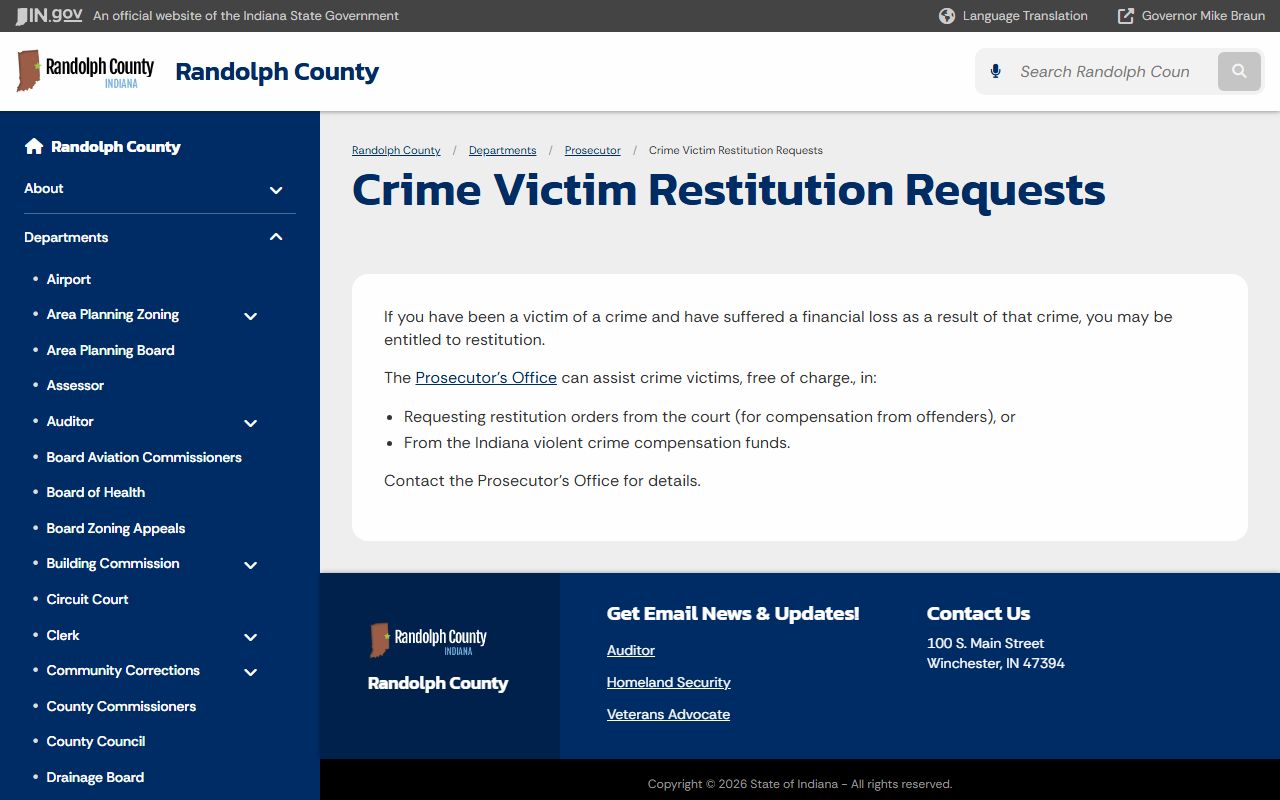
Restitution issues may appear later in the criminal case record after charges are filed and the case moves toward disposition.
Randolph County Charge Status
Charges can change after the first filing. One arrest can produce several separate charges. A later hearing, plea negotiation, amended information, dismissal, or trial result may change what the case shows. The Chronological Case Summary is the event log to read because it records filings, orders, hearings, notices, judgments, payment entries, and disposition where public.
| Status | What It Means | Where to Confirm |
|---|---|---|
| Pending | The charge is still open and not finally resolved. | MyCase hearing and CCS entries |
| Amended | The prosecutor changed the charge wording, level, or statute. | Later charging entry or court order |
| Reduced | A charge moved to a lower level, often through plea or amendment. | Disposition and plea entries |
| Dismissed | The court record shows the charge ended without conviction on that count. | Dismissal order or CCS disposition |
| Convicted | The defendant was found guilty or entered a guilty plea. | Judgment and sentencing entry |
Bond entries should also be checked. Randolph local rules state bond is based on the highest offense, and listed bond can be affected by habitual allegations, current release, probation, or parole. For Level 6 felonies and misdemeanors, the Sheriff may accept a 10 percent cash deposit under Indiana Code authority referenced in the local rules.
Randolph County Charges vs Convictions
A charge is an accusation filed in court. A conviction is a final guilty finding or guilty plea. That difference matters when reading Randolph County arrest records because a booking charge can be broader, narrower, or different from the final court result. A dismissed charge may still appear in the public case history unless it is later sealed, expunged, or excluded by rule.
| Point | Charge | Conviction |
|---|---|---|
| Stage | Filed after arrest or investigation | Entered after plea, verdict, or judgment |
| Meaning | Alleged offense, not proof of guilt | Court outcome showing guilt on that count |
| Record location | Charging document and CCS | Disposition, judgment, and sentencing order |
| Can change | May be amended, reduced, or dismissed | May be appealed or later restricted if eligible |
Important: A Randolph County arrest or charge is not the same as a conviction, and the final docket controls the case result.
Randolph County Charge Access Rules
Indiana public access is shaped by the Access to Public Records Act and the Indiana Rules on Access to Court Records. Non-confidential court case information is generally public, but court records have judicial rules that exclude certain material. MyCase may show case summaries, some orders, and sentencing orders, while other non-confidential documents require in-person clerk access.
The court rules and public-records law matter most when a charge record involves juvenile proceedings, adoption, mental health, protected-party data, sealed records, or expunged records. Randolph local rules assign juvenile, adoption, mental health, guardianship, trust, and estate categories to Circuit Court, but many of those categories are restricted from broad public view.
The Indiana Code Title 5 public records source is the state law source for non-court agency records.
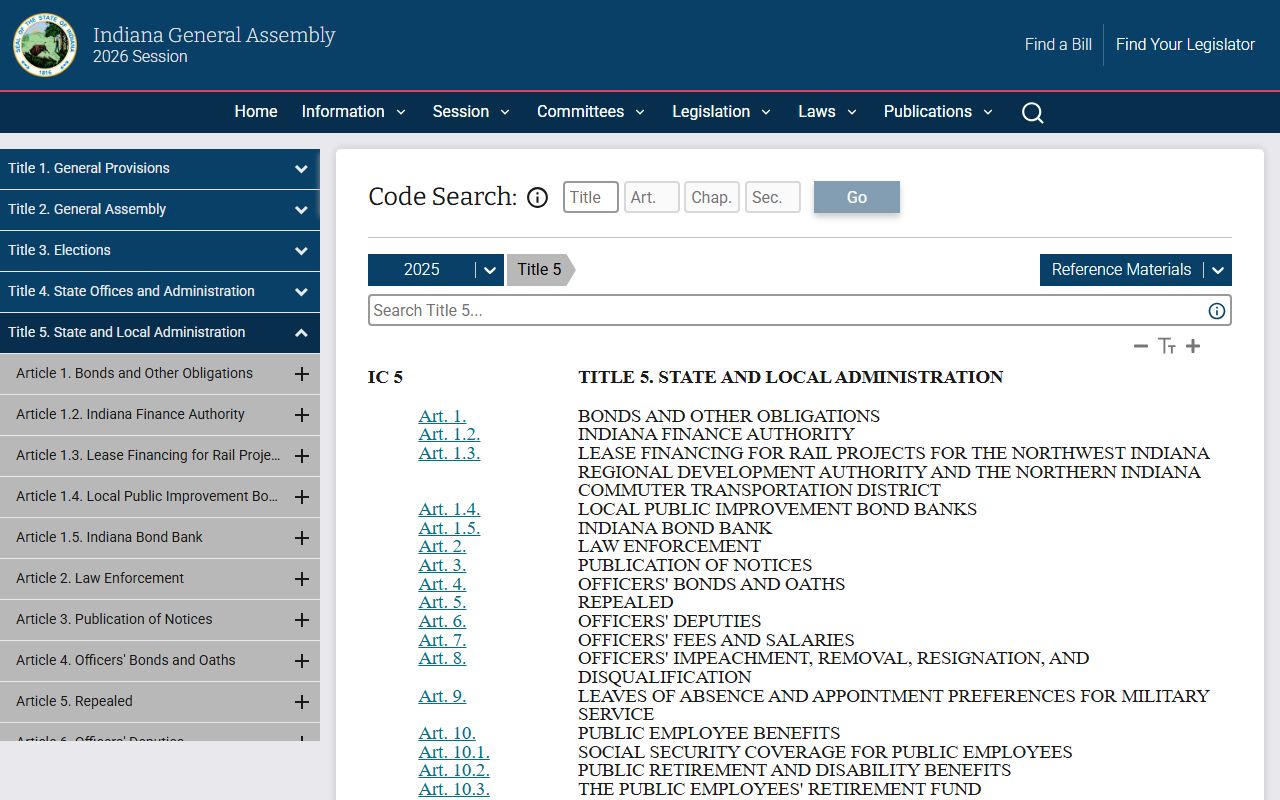
Indiana public-record law works with court-access rules, so sheriff records and court charge records may have different limits.
Restricted Randolph County Arrest Records
Some arrest and charge records do not remain open to the public. Indiana Code Title 35, Article 38, Chapter 9 covers expungement for eligible arrest, non-conviction, and conviction records. Juvenile law under Indiana Code Title 31 and court access rules also restrict many juvenile matters. Protection-order cases are not part of ordinary MyCase public search because protected-party identifying information is excluded from online public access.
| Record Limit | Practical Effect | Research Source |
|---|---|---|
| Sealed | Public access is restricted by court order or rule. | Indiana Access to Court Records |
| Expunged | Release of eligible arrest or conviction records is limited by statute. | Indiana Code Title 35 |
| Juvenile | Public access is limited because minor records are protected. | Indiana Code Title 31 and court rules |
| Protected identifiers | DOB, protected-party data, and sensitive account data are excluded or redacted. | MyCase access rules |
Sealing and expungement are often confused, but they are not the same public-access result. A sealed record is hidden from ordinary public view by rule or order. Expungement is a statutory process that limits release of eligible arrest, non-conviction, or conviction records under Indiana law.
| Point | Sealed | Expunged |
|---|---|---|
| How it happens | Court rule, statute, or judge's order restricts public access. | Eligible person petitions under Indiana expungement law. |
| Public effect | Record is not open like an ordinary public charge record. | Release is limited according to the expungement order and statute. |
| Who may still see it | Courts, law enforcement, or authorized users may retain access. | Courts, prosecutors, law enforcement, or authorized entities may still have access in some settings. |
Note: Use the clerk or the maintaining court for certified records because public portals can omit restricted or non-online documents.